
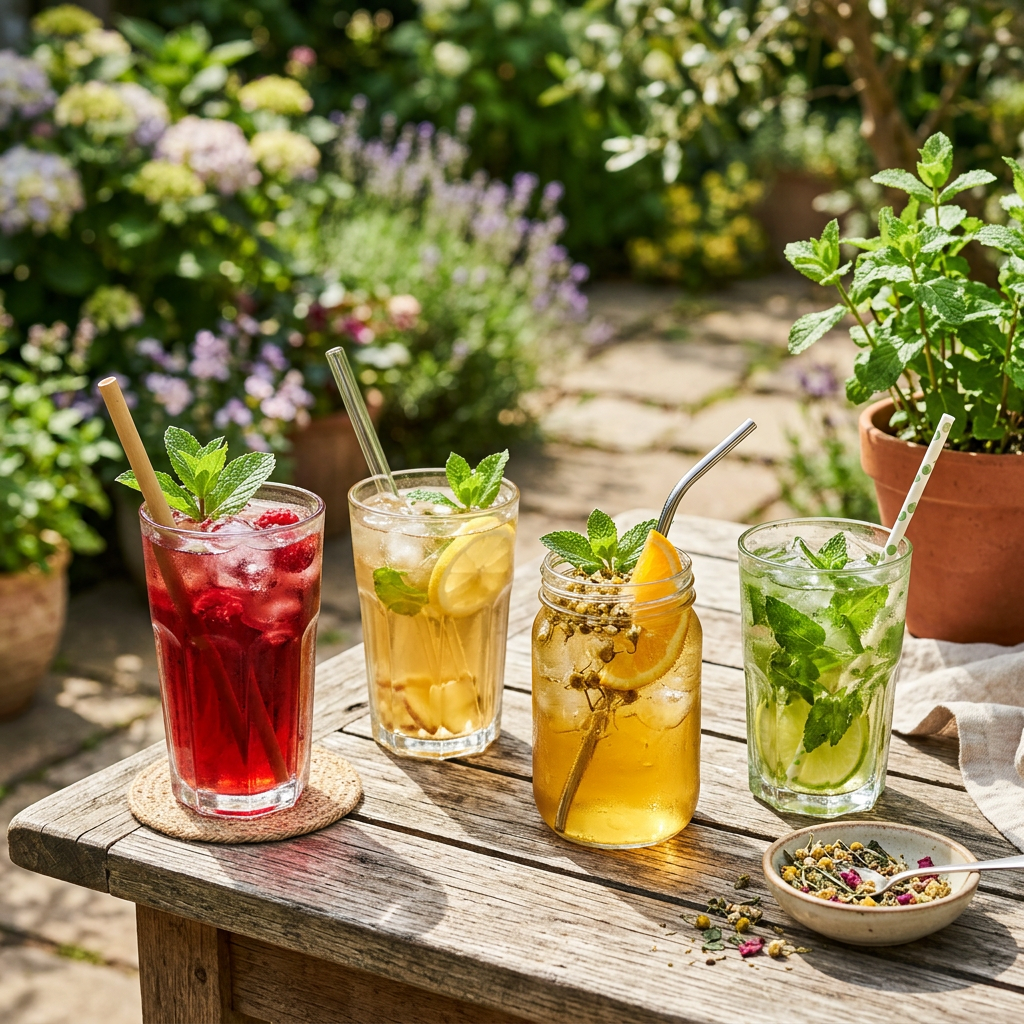
When the heat climbs and the air turns thick and heavy, a steaming mug of tea is the last thing anyone wants. But that doesn’t mean tea season has to end — it just needs to change temperature. Cold-brewed and iced herbal teas offer many of the same therapeutic benefits as their hot counterparts, plus a refreshing chill that can help your body actually cope with summer heat. Below is a guide to some of the best herbal options for warm-weather wellness, along with tips for brewing them cold.
Why Go Herbal (and Cold) in Summer
Herbal “teas” are technically tisanes — infusions made from dried flowers, leaves, roots, or fruit rather than the Camellia sinensis plant. Because most are naturally caffeine-free, they’re an easy way to stay hydrated all day without the jittery buzz or the diuretic effect of caffeinated beverages. Many herbal infusions also carry traditional and, in some cases, scientifically supported benefits, from easing digestion to calming the nervous system, making them a gentle, low-effort addition to a summer wellness routine.
Cold brewing (steeping herbs in room-temperature or cold water for several hours, rather than pouring boiling water over them) has an added bonus: it tends to produce a smoother, less bitter flavor while still extracting plenty of beneficial plant compounds.
Peppermint: The Classic Cooling Agent
Peppermint’s signature ingredient, menthol, triggers the body’s cold-sensing receptors, creating a genuine cooling sensation as you drink it. Beyond the refreshment factor, peppermint tea has long been used to support digestion and ease occasional bloating or stomach discomfort, making it a great choice after a heavy summer barbecue. Steep peppermint leaves in cold water for 4–6 hours, or quick-brew hot and pour over ice for a faster fix.
Hibiscus: Tart, Vibrant, and Heart-Friendly
Hibiscus tea’s deep ruby color and tart, cranberry-like flavor make it one of the most refreshing options for a hot day. It’s rich in antioxidants called anthocyanins, and some research suggests hibiscus tea may help support healthy blood pressure already within a normal range. Its natural tartness pairs beautifully with a bit of honey and a squeeze of lime over ice.
Chamomile: Gentle Calm, Even Cold
Chamomile isn’t just for bedtime. Iced chamomile tea retains the herb’s mild, apple-like sweetness and its reputation for promoting relaxation and easing occasional stress or mild digestive upset. Because chamomile is naturally caffeine-free, it’s a soothing midday option that won’t disrupt sleep later, even when enjoyed chilled in the afternoon sun.
Lemon Balm: Bright and Nervous-System Soothing
A member of the mint family, lemon balm has a light, citrusy flavor and a long history of use for calming nervous tension and supporting mental clarity. Some small studies suggest it may help ease mild anxiety and improve mood. Cold-brewed lemon balm makes a wonderfully light, almost lemonade-like drink. Try mixing it with fresh mint for a double dose of coolness.
Ginger-Lime Cooler: Digestive Support with a Kick
It may seem counterintuitive to reach for a warming spice like ginger in summer, but ginger tea served cold is a favorite in many tropical climates precisely because it aids digestion and can help settle an upset stomach — common concerns during a season of barbecues, ice cream, and spicy grilled foods. Combine cold-brewed ginger with fresh lime juice and a touch of honey for a zesty, invigorating cooler.
Rooibos: Antioxidant-Rich and Naturally Sweet
Rooibos, or “red bush” tea from South Africa, is naturally caffeine-free and slightly sweet, making it an easy iced tea base for those sensitive to bitterness. It’s high in antioxidants and has traditionally been used to support skin health and digestion. Rooibos holds up well to cold brewing and takes flavor additions like citrus, mint, or berries beautifully.
A Simple Cold-Brew Method
For any of the herbs above:
- Use about 1 tablespoon of dried herb (or 2–3 tea bags) per quart of cold, filtered water.
- Steep in the refrigerator for 4–8 hours, or overnight for a stronger brew.
- Strain out the herbs, then serve over ice with your favorite additions — citrus slices, fresh mint, a drizzle of honey, or a splash of sparkling water for effervescence.
A Note of Caution
Herbal teas are generally gentle, but “natural” doesn’t always mean risk-free for everyone. Some herbs can interact with medications or aren’t recommended during pregnancy, and people with certain health conditions should check with a doctor before making any herbal tea a daily habit. If you’re on medication or managing a health condition, it’s worth a quick conversation with a healthcare provider before incorporating new herbal teas regularly.


Leave a Reply